
Image from konpa.info
Konpa is proudly celebrating its 70th year in 2025! Like no other, it is a staple in Haitian music. From the full-band rhythms of legendary groups like Tabou Combo, System Band, and Zenglen to the modern rhythms of both groups and solo artists like CaRiMi, Enposib, Joé Dwèt Filé, and many more, this beloved genre continues to evolve, break barriers, and captivate audiences worldwide.
If you grew up in a Haitian household, you’ve heard Konpa. But how many of us really know where it came from, or why it still matters today?
Drawing from the insights of Konpa historian Jean Claude Vivens insights on the Fel Mache Plus cultural radio show, the book Haïti en Musique : 160 Melodies Populaire by Marc Lamarre and the conversations between Carel Pedre, DJ K9, and Haitian artists on the De Tout et De Rien podcast, let’s dive into the roots of the genre, its turning points, and where it could go next.
Prior to 1955, Konpa—as a word or musical style—did not exist. Haitian were consuming mostly foreign music like Latin style and jazz. Other music genres like Twoubadou, Meringue and vodou inspired music were also consumed (Lamarre, 2020).
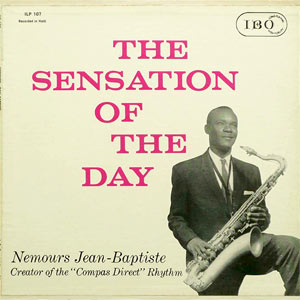
This all changed on July 26, 1955, when musician Nemours Jean-Baptiste presented his band under the name Ensemble Nemours Jean-Baptiste. From that day onward, he continued experimenting by blending various musical styles, creating the foundational sound of Compas Direct (Konpa Dirèk), which “introduced the genre, the rhythm, and how it should be danced” (Vivens, 2020).
His version of Konpa competed with the style known as kadans Konpa, which was proposed by Webert Sicot, a fellow colleague of Jean-Baptiste when they played in the band Conjunto Internacional. The two leaders were engaged in a long period of arguments and controversy before squashing their beef and coming together to create the Union music label (Lamarre, 2020).
Because Jean-Baptiste’s version of Konpa was simpler, it became the style most widely adopted by musicians.
At the heart of Compas Direct are percussion instruments such as the tanbou (Haitian drum), small cymbals, cowbell, graj (guiro), tcha-tcha (maracas), and—later in its evolution—the electric guitar and saxophones.
It’s important to note that this style was initially played by large jazz ensembles with many musicians. In the 1960s, the genre experienced a boom in popularity across the Caribbean and the Antilles. Many groups started forming and gaining traction—Les Shleu Shleu, Frères Déjean, Tabou Combo, Les Difficiles de Pétion-Ville, among others.
These bands then reduced their number of musicians and became known as mini-jazz—a smaller ensemble format that gave Konpa a distinct character.
When bands began recording, Cap-Haïtien local band Orchestre Septentrional, known as Septen stood out. They had already built a catalog of musical material, allowing them to release new music annually, which helped them dominate the scene (Vivens, 2020).
Throughout the 60s, all the active bands contributed to the evolution and texture of Konpa—whether through impactful lyrics or memorable guitar performances that paved the way for future generations of artists.
In the 1970s, many musicians began leaving the country, which slowed the production of the genre. In 1975, the Martinican Gordon Henderson, from the group Exile One released Aki Yaka, introducing the keyboard synthesizer. This song dominated Haiti’s airwaves and consumers quickly demanded more of that sound. With this new direction, bands became smaller—some with only three members (Vivens, 2020).
In the 1980s and 1990s, the Guadelopean group Kassav’ rose to prominence in the Caribbean and Antillean music scenes offering zouk, which is a synthesis of cadence-lypso and konpa.
Because Haiti continued losing musicians due to migration to the U.S. music production slowed down and it was the creation of Haitian groups in the diaspora who were carrying the torch.
In the diaspora, many new Haitian music groups emerged in New York (1980s) and Florida (1990s), including Zin (which gave us the beloved Alan Cavé), Fantom, Mizik Mizik, and Zenglen among others (Vivens, 2020).
Again, in the 1990s, Haitian music in Haiti was sharing the scene with Racine and Rap Kreyòl genres that were gaining popularity. However, groups and soloists like Kreyol La, T-Vice, Sweet Micky, Mikaben to name a few saw their debut during that time (Vivens, 2020).
In the 2000s, Carimi was born, along with Nu-Look, and Zenglen rebranded. The 2010s brought us Klass, Enposib, and many solo artists (Vivens, 2020).
When the genre first started, musicians had to push for their music to be played and accepted, as the Haitian elite were resistant to this new form of popular music (Vivens, 2020).
Vivens noted that in the early days of the genre, Haitian radio put a greater emphasis on foreign music—Latin, English, and French—which reduced the exposure of the genre to the Haitian population.
This gives context to why there’s a lack of formal structure around the genre—whether through formal education of music, sheet music, intellectual property protections or naming conventions (Lamarre, 2020).
Fast forward to today, the musical scene is not producing, encouraging or promoting the emergence of new talents. Most “new” bands or solo artists are from rebranded and repurposed themselves to appear as new.
Speaking of naming conventions, we often see different variations of the name—Kompa, Compas, or Konpa? But which spelling is actually correct?
In French, the word is compas, and that was the term Jean-Baptiste used to introduced the genre. In Haitian Kreyòl, it’s konpa. So why an “n” instead of an “m” ? Because in Haitian Kreyol, linguistically we don’t place an “m” in front of a “p”.
The spelling with the “m” is a widespread mistake. One that took root in miseducation—even the great artist in the industry have published content using the incorrect spelling.
It’s a mistake we’ve collectively gone along with, but it’s worth correcting if we want to preserve the cultural and linguistic integrity of the genre by using the proper terms: compas or konpa.
During a conversation with my Nigerian friend about 4 Kampé II, by Joé Dwèt Filé featuring Burna Boy, he mentioned that Konpa sounded “lazy” because to him most of the songs sounded the same.
I had mixed feelings about that statement. As a lover of Konpa, I appreciate the richness and complexity of the lyrics and melodies—though maybe that’s because I’m Haitian.
Still, I have to admit that at times, the genre felt stagnant—especially with the rise of gouyad.
Because there’s limited research and documentation on Konpa online, I haven’t been able to pinpoint exactly when the keyboard came to define the genre to the newer generation and audience—but while it may have helped commercialize the sound, let’s be clear: gouyad is not Konpa, and the overreliance on the keyboard should not be what defines it.
This isn’t a new issue. As historian Jean Claude Vivens has noted, Konpa has gone through cycles of stagnation before—times when artists stuck to the formula instead of innovating.
It’s time for musicians to innovate the template while honoring the great foundation laid before us. Let’s bring artistry back into the formula.
Aside from the exposure Tabou Combo brough the genre, over the last decade, Konpa has started turning more global heads. You can hear its influence in tracks like Narcos by Migos, which sampled the iconic guitar style of Roberto Martino from Les Difficiles de Pétion-Ville.
Then there’s 4 Kampé by Joé Dwèt Filé and 4 Kampé II with Burna Boy, which sampled the beloved song Je Vais by Fabrice Rouzier. Those tracks pushed Konpa into new spaces and new audiences.
More recently, Zenglen’s song “Child Support” got featured in the GTA VI trailer, putting a spotlight on the band and showing how powerful exposure can be.
Even the dance reached global heights, thanks to Beverlie Fleurinay, @bev_flowers, who’s teaching Konpa moves from the U.S. all the way to China.
To top it off, in 2024 a formal nomination was submitted to UNESCO for Compas dance and music to be included on the Representative List of the Intangible Cultural Heritage of Humanity—a designation that recognizes and helps protect cultural traditions around the world. If all goes well, it should become official by the end of the year.
These are only a few examples highlighting that the world is watching and wants more.
We’ve got the sound. We’ve got the talent. We’ve got the rhythm. Now, it’s time for the industry’s key players to build on this momentum to push Konpa forward.
Sadly, with the ongoing instability in Haiti, it seems this movement will primarily fall into the hands of the diaspora. Still, it will be essential to foster collaboration to ensure united efforts that benefit the entire community.
It’s time to build forward by standing on what’s already here. Learn from the legends. Study the mistakes. Fix the gaps. And most importantly, create space for the next wave of artists to shine.
This can only happen if the industry model evolves so that it can support new and current artists, producers, and creatives who love the genre and want to take it somewhere new while honoring its roots. This idea has also been raised many times on the podcast De Tout et De Rien by Carel Pedre and DJ K9, which often dives into conversation with HMI artists about the legacy of Konpa.
As a listener and not an insider, here’s my two cents on the changes that can keep propulsing Konpa forward.
Cross-genre fusion, nostalgic revivals through sampling, is on the rise in the music scene. Songs like Kompavana fusion made by AlexCkj of Konpa and Salsa or DJ Tony Blanck fusing afro house with Konpa with #Newyorkcity by Tabou Combo show us that Konpa blended with other genres can be a musical feast.
As Haitians living with hyphenated identities—Haitian-American, Haitian-Canadian, or Haitian-anything-else—let’s embrace multilingual lyrics to connect across borders and the music more accessible just like Naïka did with 6:45 or Isemylee ft Troubleboy Hitmaker with Sans Fin.
Continuing to collaborate with other international artists also brings the spotlight to our genre. Bridges like Michaël Brun and Zoey Dollaz are making groundbreaking connections and with the results they’ve produce, it’s clear the industry needs more connectors and mentors.
This could increase visibility for artists living in Haiti and across the diaspora—not limited to the US— as well as both established artists, and emerging ones.
Let’s also make room for all sides of our sound—bring back the tanbou, the accordion, the guitar, the saxophone and the maracas. Let’s not reduce the genre to just the keyboard.
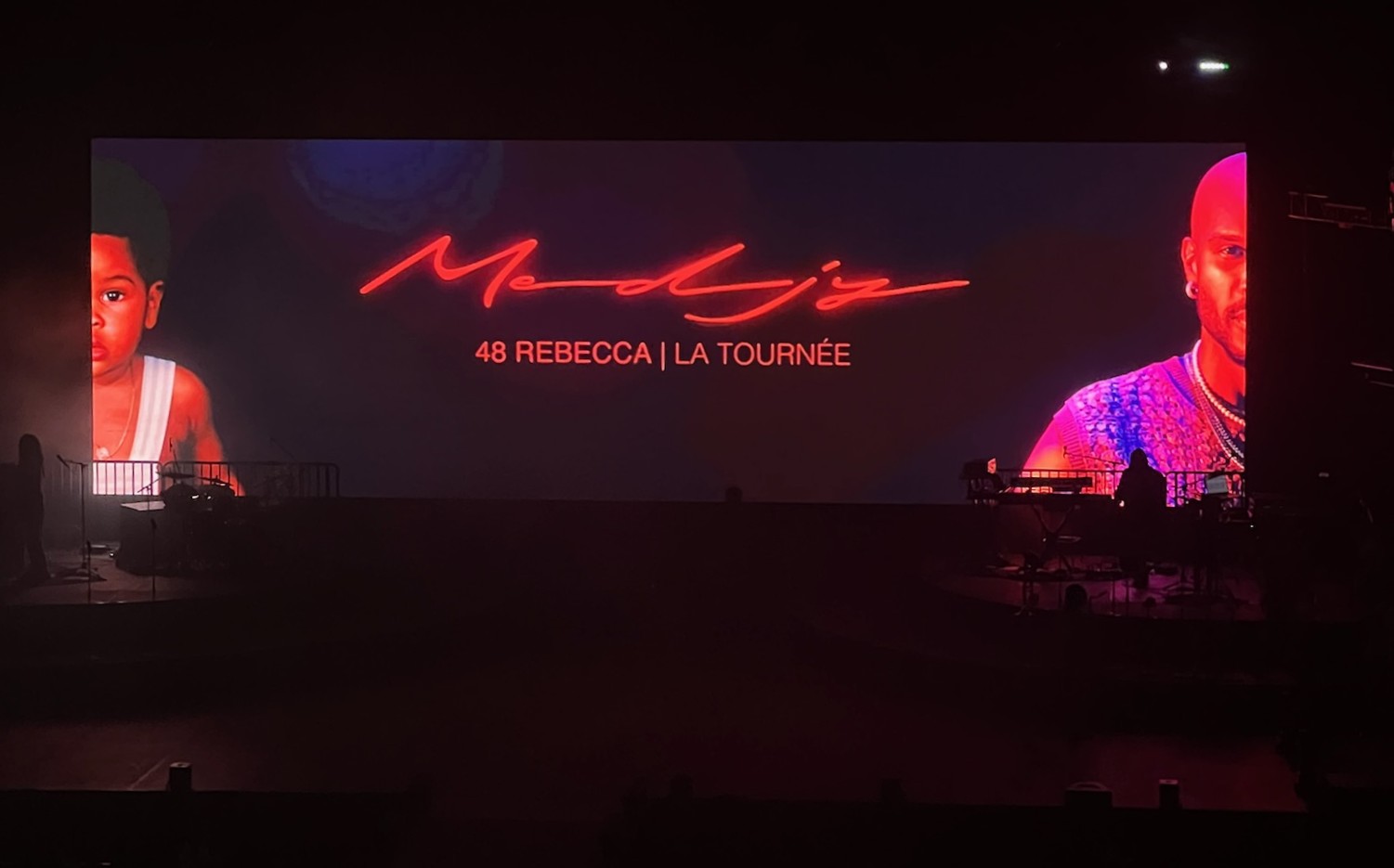
Let’s invest in storytelling across themes, visuals and lyrics. Thoughtful and artistic music videos—just as Medjy did with Awoyo—can translate emotion, culture, and meaning in ways words alone can’t, even if the lyrics are in Kreyòl.
And finally, let’s have a an online space centralized to educate and highlight the history of Konpa.
We inherited this sound. Now it’s our turn to evolve it, protect it, and share it with the world—in our way.
For its next commemorative milestone, let’s not let only Ritchie and Zenglen be the only celebrating the genre.
In the meantime, if you can, grab your tickets to the Boston Kulture Festival happening on June 15 to celebrate our genre.